- 94.8% of websites tested had detectable WCAG failures with 36.9 errors per page
- WCAG 2.1 AA compliance is now required for donor-funded projects in East Africa
- Government RFPs increasingly include accessibility conformance reports and penalty clauses for non-compliance
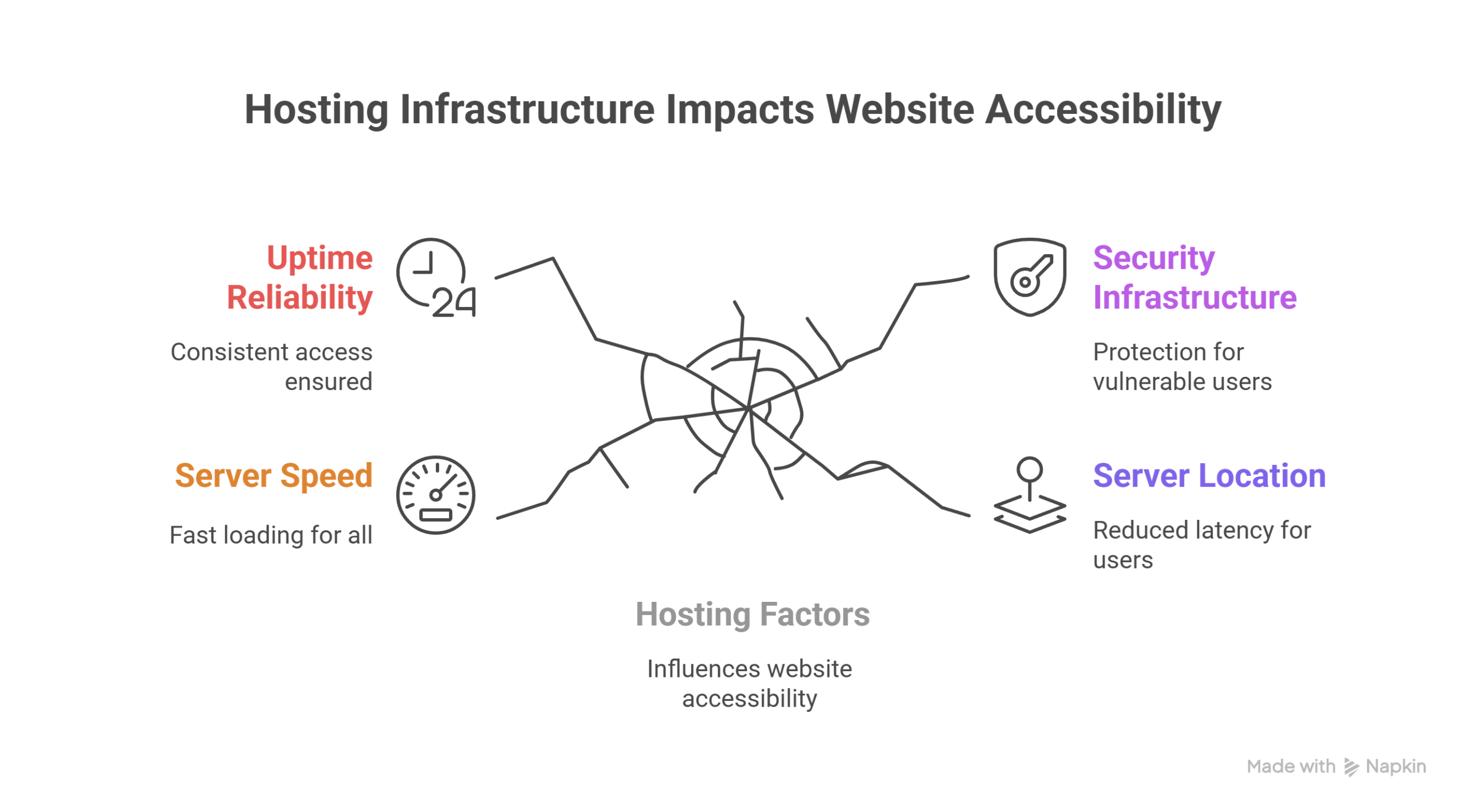
- Hosting performance directly impacts accessibility with timeouts affecting assistive technology users
Web accessibility compliance is rapidly transforming hosting requirements across Kenya as government agencies, donor-funded organizations, and multinational corporations mandate WCAG 2.1 AA standards for digital projects. This shift means hosting providers who understand accessibility requirements will increasingly capture enterprise and public sector business opportunities.
The Rising Demand for Accessibility in Kenyan Digital Infrastructure
Web accessibility compliance has evolved from an optional consideration to a mandatory requirement across East Africa's digital landscape. The transformation is driven by three key forces reshaping how Kenyan organizations approach their online presence.
Donor-Funded Project Requirements
International development organizations are leading the accessibility mandate in Kenya. USAID, UN agencies, and European Union-funded projects now explicitly require WCAG-aligned websites as part of their procurement standards. These requirements filter down through implementing partners, creating a cascading effect across Kenya's NGO and development sectors.
The financial impact is substantial. Kenya receives over $2.8 billion annually in development assistance, with significant portions allocated to digital infrastructure and capacity building projects. Organizations seeking these funding opportunities must demonstrate accessibility compliance from project inception through completion.
Corporate and Parastatal Digital Policies
Large Kenyan corporations are updating their digital policies to include accessibility standards. East African Portland Cement's website accessibility statement exemplifies this trend, stating their commitment to adhere to WCAG 2.1 AA standards to ensure access for people with visual, motor, and cognitive disabilities.
This corporate adoption reflects broader recognition that accessibility improves user experience for all customers while expanding market reach. In Kenya's diverse linguistic and technological landscape, accessible design principles benefit users across different devices, connection speeds, and technical capabilities.
Government Procurement Evolution
While Kenya hasn't enacted specific accessibility legislation, government procurement language increasingly mirrors international standards. Public tenders now include requirements for Voluntary Product Accessibility Templates (VPATs) and accessibility conformance reports, with penalty clauses for non-compliance.
Source: WebAIM Million 2025 Report
Technical Hosting Requirements for Accessibility Compliance
Accessibility compliance extends beyond front-end design into core hosting infrastructure requirements. Modern accessibility standards demand specific technical capabilities that directly influence hosting platform selection and configuration.
Performance and Reliability Standards
WCAG guidelines require content to be perceivable and operable across diverse user conditions. This creates specific hosting performance requirements that go beyond traditional metrics.
Users with assistive technologies often experience longer page load times due to screen readers processing complex page structures. Additionally, Kenya's varied internet infrastructure means many users access websites through slower connections or older devices. Hosting platforms must accommodate these conditions without compromising accessibility features.
| Performance Metric | Standard Requirement | Accessibility Impact |
|---|---|---|
| Page Load Time | Under 3 seconds | Screen reader processing time |
| Server Response | Under 200ms | Reduced timeout risks |
| Uptime | 99.9% minimum | Consistent access for assistive tech |
| CDN Coverage | Africa-optimized | Low-bandwidth user support |
Media and Document Support
Accessibility compliance requires sophisticated media handling capabilities that many standard hosting configurations cannot support effectively. Video content must include captions through VTT files, while audio descriptions require separate audio tracks synchronized with visual content.
Document accessibility presents particular challenges in the Kenyan context where PDF forms remain common for government and business processes. Hosting platforms must support both accessible PDF delivery and alternative HTML versions, with proper content-type headers and caching configurations.
Essential Media Features
Hosting platforms supporting accessibility must handle VTT caption files, multiple audio tracks for descriptions, accessible PDF alternatives, and proper MIME type configurations for assistive technology compatibility.
Security and Authentication
Accessible authentication systems require hosting platforms that support predictable, keyboard-navigable security features. This is particularly relevant in Kenya where M-Pesa integration and mobile money authentication are standard business requirements.
The intersection of accessibility and security becomes critical when considering Kenya's high mobile money usage. Payment forms must be keyboard-navigable, screen-reader compatible, and maintain security standards without creating accessibility barriers.
Compliance Impact on Hosting Contracts and SLAs
The shift toward accessibility compliance is fundamentally changing hosting service agreements across Kenya's business landscape. Organizations implementing WCAG standards require hosting providers who understand compliance implications and can support accessibility requirements through contractual commitments.
Service Level Agreement Evolution
Traditional hosting SLAs focus on uptime, storage, and bandwidth metrics. Accessibility-aware contracts expand these parameters to include performance standards that affect users with disabilities. Response time guarantees become more stringent when considering assistive technology requirements.
Hosting providers are beginning to include accessibility-specific language in their service agreements, covering areas such as server response times during high traffic periods, CDN performance for media-heavy accessible content, and support for accessibility testing tools.
Liability and Indemnification
As accessibility compliance becomes legally mandated in various jurisdictions, hosting contracts increasingly include indemnification clauses related to accessibility failures. While Kenya hasn't enacted specific accessibility legislation, organizations working with international partners often require hosting providers who understand these liability implications.
Accessibility-Ready Hosting Solutions
Get hosting infrastructure designed for WCAG compliance with M-Pesa integration, CDN optimization, and local support in English, Swahili, and Somali.
Vendor Selection Criteria
Organizations evaluating hosting providers now consider accessibility readiness as a primary selection criterion. The evaluation process includes technical capabilities assessment, compliance understanding, and support team expertise in accessibility requirements.
Kenyan businesses targeting government contracts or donor funding increasingly require hosting partners who can provide accessibility compliance documentation, support VPAT completion, and demonstrate understanding of WCAG implementation requirements.
Market Opportunities and Competitive Advantages.
how web hosting infrastructure affects accessibility scaled
The accessibility compliance trend creates significant market opportunities for hosting providers who position themselves as accessibility-ready solutions. Early adoption of accessibility expertise provides competitive advantages across multiple market segments.
Government and Public Sector
Kenya's devolved government structure creates numerous opportunities for hosting providers who understand accessibility requirements. County governments, parastatals, and national agencies increasingly include accessibility language in their procurement processes.
The opportunity extends beyond website hosting to encompass digital service platforms, citizen engagement portals, and e-government applications. Providers demonstrating accessibility expertise position themselves for long-term government partnerships as digital transformation accelerates.
NGO and Development Sector
Kenya's robust NGO sector, supported by significant international funding, represents a substantial market for accessibility-aware hosting solutions. Organizations working in health, education, and social services increasingly recognize accessibility as fundamental to their mission effectiveness.
Development organizations operating across multiple countries value hosting partners who understand international accessibility standards and can support compliance across diverse regulatory environments.
Corporate and Enterprise Markets
Multinational corporations operating in Kenya are extending their global accessibility standards to regional operations. This creates demand for hosting providers who can support enterprise-grade accessibility compliance while offering local expertise and support.
Market Positioning Strategy
Hosting providers emphasizing accessibility readiness, local expertise, and compliance support are capturing premium enterprise accounts as organizations prioritize accessibility in their vendor selection processes.
Implementation Challenges and Solutions
Despite growing demand for accessibility-compliant hosting, implementation challenges remain significant across Kenya's hosting market. Understanding these challenges enables hosting providers to develop targeted solutions that address real market needs.
Technical Expertise Gaps
Many hosting providers lack deep understanding of accessibility requirements and their infrastructure implications. This knowledge gap creates opportunities for providers who invest in accessibility training and develop specialized expertise.
The solution involves comprehensive staff training on WCAG guidelines, assistive technology testing, and accessibility evaluation tools. Providers who develop this expertise can command premium pricing while delivering superior value to compliance-focused clients.
Infrastructure Investment Requirements
Accessibility compliance often requires infrastructure upgrades including enhanced CDN capabilities, improved caching systems, and specialized media delivery platforms. These investments represent significant costs that must be balanced against market opportunities.
Successful providers approach these investments strategically, focusing on features that deliver value across their entire client base while meeting accessibility requirements. CDN optimization, for example, improves performance for all users while specifically benefiting accessibility compliance.
Education and Market Development
The Kenyan market's understanding of accessibility requirements continues evolving, creating both challenges and opportunities for hosting providers. Client education becomes a crucial component of service delivery as organizations navigate compliance requirements.
Providers who position themselves as accessibility consultants rather than simple hosting vendors create stronger client relationships and command higher service fees. This consultative approach proves particularly valuable in Kenya's relationship-focused business environment.
Future Outlook for Accessibility-Ready Hosting in Kenya
The trajectory toward universal accessibility compliance appears irreversible as international standards, donor requirements, and corporate policies align around WCAG implementation. This convergence creates a transformative opportunity for Kenya's hosting industry.
Regulatory Environment Evolution
While Kenya lacks specific accessibility legislation, the regulatory environment shows signs of evolution toward compliance requirements. The Kenya Bureau of Standards increasingly references international accessibility standards in its ICT guidelines, suggesting future regulatory development.
Government digitization initiatives, including the Huduma Kenya platform and county digital services, demonstrate growing awareness of accessibility importance. These platforms set precedents that influence broader market expectations and requirements.
Technology Integration Opportunities
Kenya's leadership in mobile money innovation creates unique opportunities for accessibility-integrated financial technology. Hosting providers supporting accessible M-Pesa integration and mobile banking interfaces position themselves at the intersection of two critical market trends.
The convergence of accessibility requirements with Kenya's mobile-first technology landscape creates opportunities for innovative hosting solutions that address local market needs while meeting international compliance standards.
Web accessibility compliance represents both challenge and opportunity for Kenya's hosting industry. Providers who develop accessibility expertise, invest in compliance-ready infrastructure, and position themselves as knowledgeable partners will capture growing market share as organizations prioritize accessibility in their digital strategies.
For businesses seeking hosting solutions that support accessibility compliance while delivering reliable performance optimized for Kenya's unique technological landscape, cybersecurity-aware hosting providers offer comprehensive solutions including M-Pesa integration, local language support, and infrastructure designed for East Africa's connectivity environment. Tayo Host combines accessibility-ready hosting infrastructure with local expertise in Nairobi, supporting WCAG compliance through fast, reliable servers, CDN optimization, and dedicated support in English, Swahili, and Somali for organizations targeting Kenya's diverse digital landscape.